

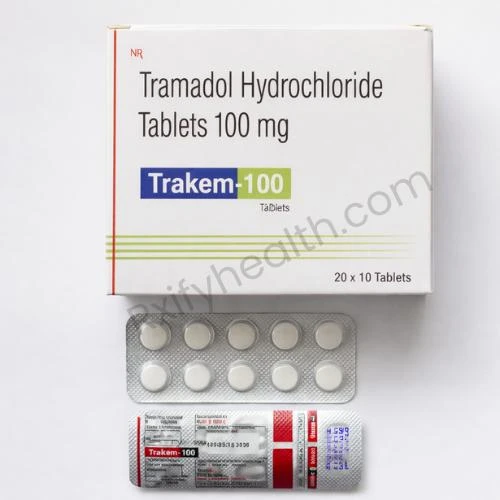

Trakem 100 mg (Generic: Tramadol)
Trakem 100 mg is a prescription medication commonly used to treat depression and insomnia. Its active ingredient, Trazodone, is classified as a serotonin antagonist and reuptake inhibitor (SARI). It helps regulate serotonin activity in the brain, promoting emotional balance and improving sleep quality. Though primarily prescribed for depression and anxiety disorders, Trakem is often used off-label as an effective sleep aid.
Key Benefits of Trakem 100 mg
● Relief from Depression and Anxiety: Trakem helps stabilize mood, reduce anxiety, and manage symptoms of major depressive disorder (MDD).
● Aids Sleep: With its calming and sedative effects, Trakem helps those who have difficulty falling or staying asleep.
● Improved Sleep Quality: Trakem enhances overall sleep duration and quality, particularly in patients experiencing insomnia due to emotional distress.
How Trakem 100 mg Works
Trakem (Trazodone) functions by adjusting serotonin levels in the brain. It prevents serotonin reuptake and blocks certain serotonin receptors, resulting in improved mood and reduced anxiety. Its sedative effects also promote better sleep, which is why it’s often prescribed for individuals struggling with both depression and insomnia.
● Balances Serotonin: By increasing serotonin availability, Trakem helps elevate mood and ease depressive symptoms.
● Supports Restful Sleep: Its natural sedative action assists in falling asleep more easily and maintaining restful sleep.
How to Use Trakem 100 mg
For safe and effective use, follow these instructions:
1. Take as directed: The initial dose usually starts at 25 mg to 50 mg, which may be gradually increased to 100 mg or more as needed. Always follow your doctor’s specific directions.
2. Take with Food: Trakem can be taken with or without food, though taking it with a meal may reduce stomach discomfort.
3. Take Before Bedtime: For insomnia, take the medication 30 minutes to 1 hour before going to bed.
4. Do Not Stop Suddenly: Stopping Trakem abruptly can cause withdrawal symptoms or relapse. Consult your doctor before making any changes.
5. Follow Dosing Adjustments Carefully: Your healthcare provider will adjust the dosage based on your condition and response. Lower doses are typically used for sleep, while higher ones address depression.
Precautions When Taking Trakem 100 mg
● Avoid Alcohol: Combining Trakem with alcohol increases drowsiness, dizziness, and the risk of side effects.
● Be Aware of Sedation: The medication may cause drowsiness, especially when starting or changing doses. Avoid driving or operating machinery until you know how it affects you.
● Risk of Serotonin Syndrome: Mixing Trakem with other serotonin-boosting drugs can lead to serotonin syndrome, a rare but serious condition. Seek medical help if you experience confusion, fever, or rapid heartbeat.
● Use During Pregnancy: Trakem should only be used under medical supervision during pregnancy if the benefits outweigh the risks.
● Extra Caution for Older Adults: Seniors are more sensitive to its sedative effects and may need a lower dose to avoid falls or dizziness.
● Watch for Side Effects: Common effects include dry mouth, nausea, dizziness, and headaches. Report severe symptoms such as chest pain, irregular heartbeat, or suicidal thoughts immediately.
Common Side Effects of Trakem 100 mg
Common side effects may include:
● Drowsiness or dizziness
● Drymouth
● Blurred vision
● Nausea
● Constipation
● Headache
● Weight gain or increased appetite
Serious side effects that need immediate medical attention include:
● Chest pain or rapid heartbeat
● Fainting or severe dizziness
● Unusual mood or behavior changes
● Symptoms of serotonin syndrome, such as agitation, confusion, high fever, or muscle stiffness
Is Trakem 100 mg Right for You?
Trakem 100 mg can be an effective choice for individuals experiencing depression, anxiety, or sleep disturbances, particularly when these conditions occur together. However, it should only be used under medical supervision and as part of a broader treatment plan. If your sleep issues persist, consult your healthcare provider about other therapies such as cognitive behavioral therapy for insomnia (CBT-I) for long-term relief.
Customer Reviews
Mia
( 30-Apr-2026 )Good communication and fast response from support.
Elijah
( 24-Apr-2026 )No complications at all, very smooth experience overall.
Zoe Nill
( 25-Mar-2026 )Really easy experience overall.
William
( 14-Feb-2026 )Very professional service and delivery
Ava
( 25-Jan-2026 )No delays, no issues
Michael Anderson
( 21-Jan-2026 )I appreciated how simple it was to find what I needed.
Jack M
( 22-Dec-2025 )Smooth process and helpful customer support.
